I started writing this over the holidays, before the new year even started, and before so many of the horrors of a federal occupation in Minneapolis—a place I love—took over my newsfeed and attention.
Play is the thing that I’m always striving for in my writing—when my writing feels like play, I know I’m headed somewhere good. What does it mean when my writing feels like play? As someone who usually writes for younger kids, it means I’m always trying to trade-in the adult-logic part of my brain in favor of the much more fun and imaginative kid-logic part of my brain.
Kid-logic is where so much good stuff is. Because kids are masters of play.
In a very practical sense, it means ignoring questions like: is this possible? would a five-year-old know this word? or is this safe? or is this too risky? or where are the adults in the book?! Because again, as a writer for children’s books, kid-logic doesn’t usually concern itself with those things and that’s what I am most interested in tapping into in my writing, things that feel possible, and real, and important to the kid-reader.
One of my picture book writing guiding lights and forever mentor texts is Vera Brogsol’s Leave Me Alone, about a very annoyed granny who just wants some peace and quiet to knit all the things for everyone she loves who also happen to be very active, distracting, and loud small children!
In her attempt to find some peace and quiet, Granny walks up a mountain with goats and caves and still no peace for all her knitting! So she keeps walking, until she walks right onto the moon. I love it so much. I think about this specific spread every time I’m writing something new to remind myself that anything is possible.
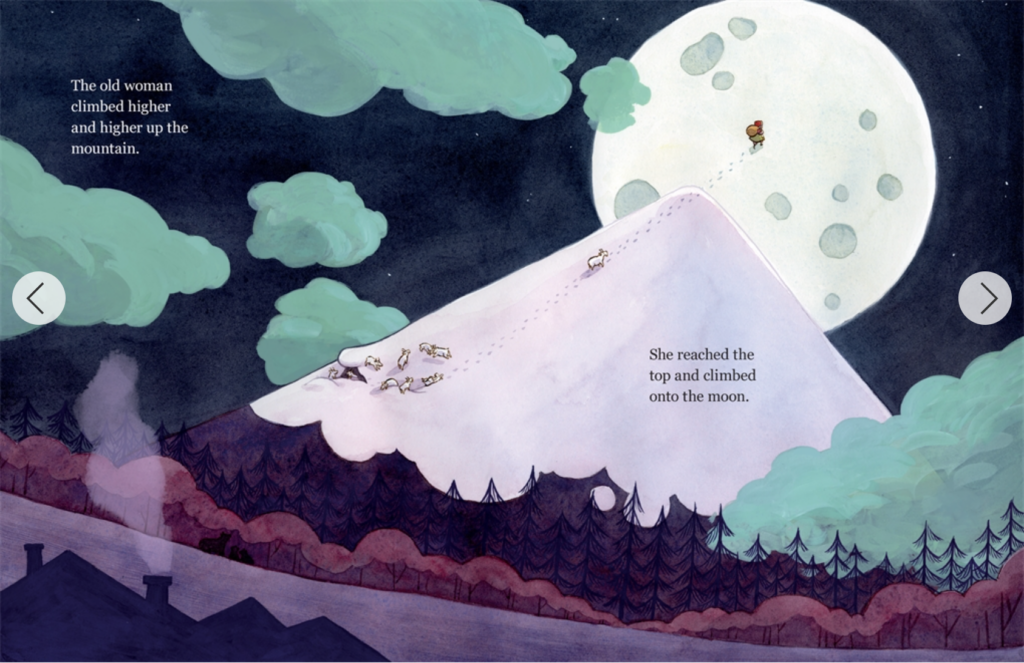
It is my if you build it, they will come (baseball-playing ghosts) moment of imaginative play and possibility in picture books.
Somewhere in my internet, social media use, I found the work of artist-designer-toy-and-play-maker, Cas Holman. And when her book on play came out last year, I immediately requested my library purchase it. Side note, did you know that your library probably has some kind of way to request they purchase a book to add to their collection? It’s great, and you can do it, and then the book gets added to your holds when/if they do purchase it. This is how it works at my library, and it’s amazing.
Over winter break, I read Playful: How Play Shifts Our Thinking, Inspires Connection, and Sparks Creativity, and I’ve been thinking more and more about play, how to add more of it to my life, ways in which I play, and as a reader and writer, books that are stellar examples of play. What does it mean to be more playful as a writer, and what does it mean to shift to more playful thinking in general.
A few years ago, when I was gathered in a room full of children’s writers, we played a kind-of ice-breaker game where you introduced yourself and then answered, “if you could meet one character from literature, who would it be?”
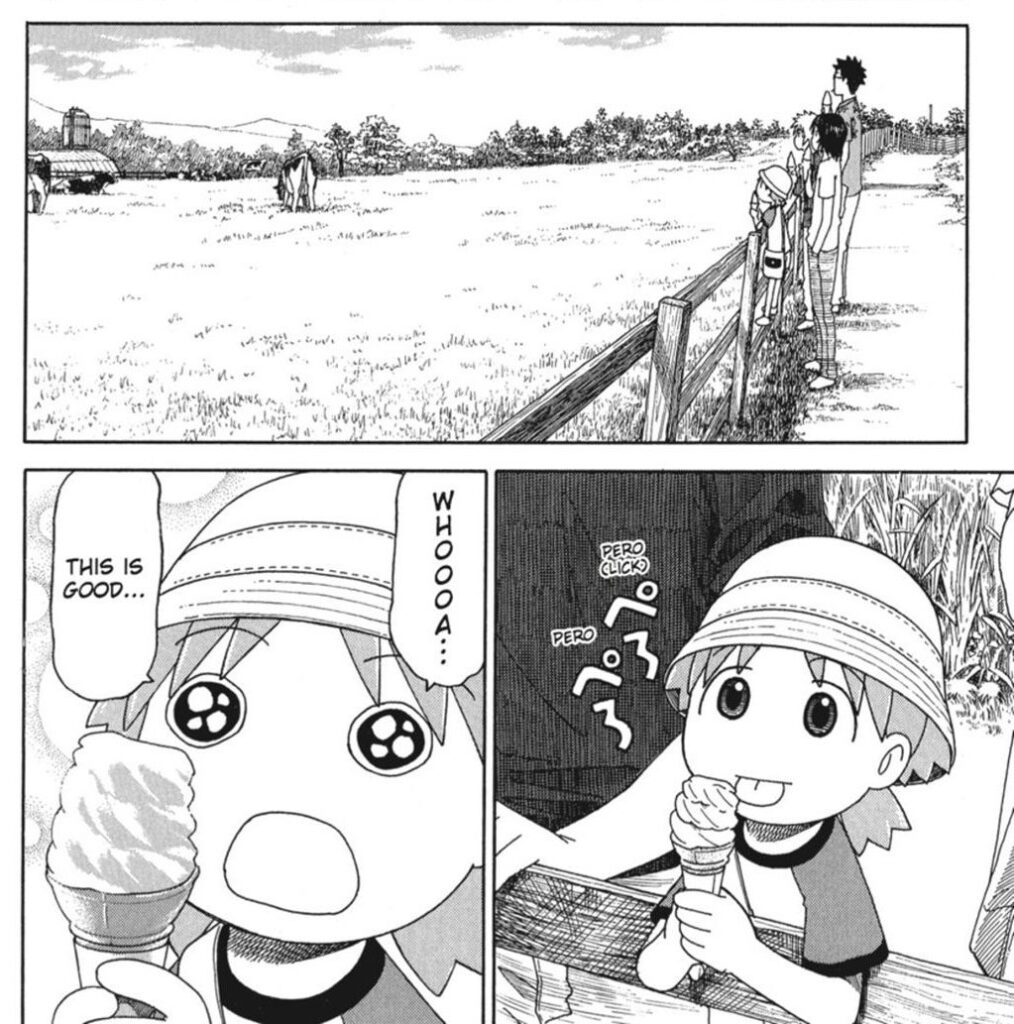
My answer then was Yotsuba, a manga character who is around five years old. Every Yotsuba book is packed with child-like wonder, everything is new, and Yotsuba treats the world, the people, her interactions with wonder. She is a walking exclamation point and one of my favorite characters, and a reminder that, “play is a mindset, a filter through which we view everything that happens to us or around us” (Holman, 59). That child-like wonder is so important to play. It’s easy to slip into playfulness when everything is new, when wonder is a mindset and a filter to how we see the world. It’s about taking time, noticing things, maybe putting your phone away, delighting in all the details.
I think if I was asked this question now, what character would I want to meet from literature, I might say, the entire cast from The Thursday Murder Club, but again, it’s another example of play and shifted expectations. And how maybe kids play versus how adults play: Yotsuba as play tied to learning, discovery, and wonder. And my favorite fictional retirees who solve crimes and definitely know where the bodies are buried: play as puzzles, as challenge, as seeing opportunity, and rebellious disregard for (many) rules. It’s play. Play, as a mindset, is a drip-line to creativity and imagination. Play opens up all kinds of opportunities. “The play is the challenge. Your Adult Voice might disagree, telling you to be careful and reasonable. Your Play Voice seeks to make it interesting, challenging, and fun” (Holman, 84), which honestly, sounds a lot like a Thursday Murder Club meeting to me.
So what does it mean to play? How do you find play? And how do you play when you don’t have children showing you how to do it—this is something I think about a lot now that my kids are older and their play and silliness looks very different than it did at two and four years old.
It’s a little less of weird imaginative games and crawling through the grass, and a little more singing loudly, silly dance parties, and craft-time, letting go of any idealized notion of making something good, and much more in line with making something to make something.
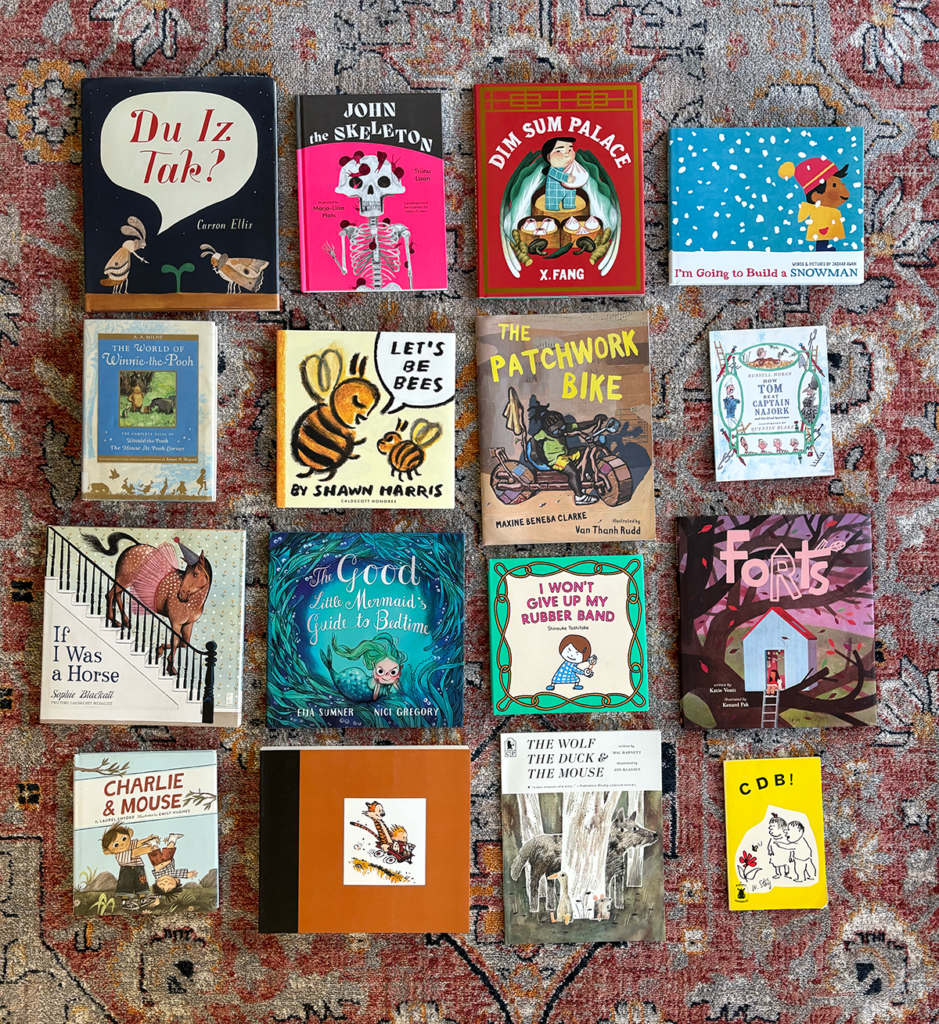
And how do you get to that place? What kind of parameters do you need to play as an adult? What does it look like when you play? When you played as a kid? When the kids arounds you play? What books are excellent examples of play? There are so many. I listened to Winnie-the-Pooh a few times over the holidays and it’s a wonderful guide on play, on possibility. Every answer and adventure is playful and fantastic, of course Winnie-the-Pooh is a cloud, tut-tutting to look like rain. Tom besting Captain Najork, a master-class in play—same with Let’s Be Bees by Shawn Harris. That’s what I want to read and write more of, that’s where I want to go in my creative pursuits, where the kid-logic is ready to go.
Anyway, that’s what I’m interested— play— that’s what I’m hoping for in my creative writing, in my life. More play, even in these soul-crushing, horrific times.
I was reminded of another passage in Playful, where Cas Holman writes about designing a play structure in the middle of a refugee camp—and the attempt to place the play area as central as possible—so that play could be appreciated and witnessed by all. “To walk past play, to hear it, to see it, is to remember that it is still happening. It’s a sign of human perseverance. Play lifts us all.” (Holman, 49)
I don’t know what the answer is to anything, but I hope we can make time to still be playful, in our lives, in our writing—because there’s so much wonder to discover there.